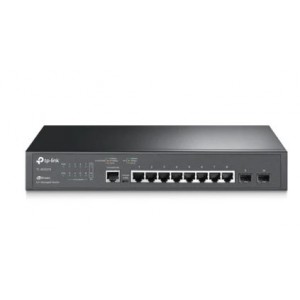
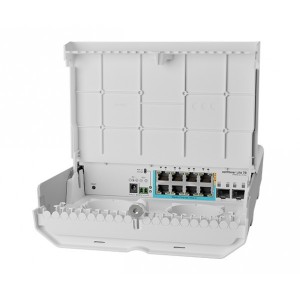
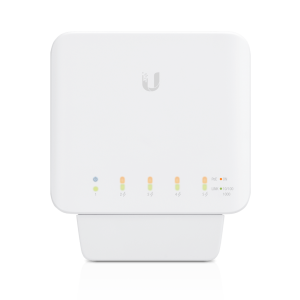
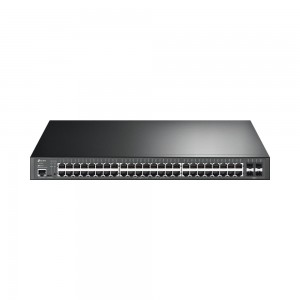
Up to 200 m PoE Distance: Standard PoE Passthrough to doubles PoE source-to-device transmission distance from 100 m (328 ft) to 200 m (656 ft) without losing gigabit speeds, perfect for long-range surveillance cameras and access points.*
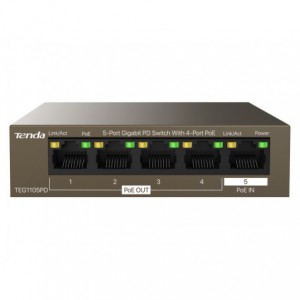
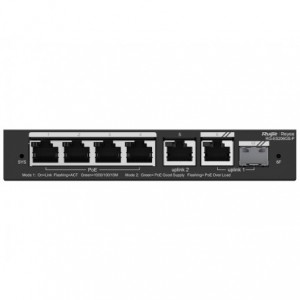
1-Port Gigabit PoE++ In and 4-Port PoE+ Out: Supports up to 64 W / 44 W / 19 W/ 6 W PoE budget output when powered by 802.3bt Type 4 (90 W), 802.3bt Type 3 (60 W), 802.3at, and 802.3af PoE, respectively.**
Outdoor Weatherproof: IP55 waterproof, dustproof, and UV-resistant enclosure. Operation temperatures of -40 to 60 °C and 4KV lightning protection further ensure stable operation against harsh outdoor conditions.
Easy Installation: Easy to mount to a wall or pole with the provided mounting kits to flexibly fit your needs.
Centralized Cloud Management: Integrates into Omada SDN for cloud access, remote management, and multi-site management.
Value-Added Features Foster Touchpoint Experiences: Static Routing, Access Control List (ACL), QoS, and VLAN.
Five-port desktop switch with one Gigabit Ethernet port and four SFP+ 10Gbps ports The CRS305 is a compact yet very powerful switch, featuring four SFP+ ports, for up to 10 Gbit per port.
The device has a 1 Gbit copper ethernet port for management access and two DC jacks for power redundancy.
The device is a very sleek and compact metallic case without any fans, for silent operation.
The device has a Dual boot feature that allows you to choose between two operating systems - RouterOS or SwOS.
If you prefer to have a simplified operating system with only switch specific features, use SwOS.
If you would like the ability to use routing and other Layer 3 features in your CRS, use RouterOS.
You can select the desired operating system from RouterOS, from SwOS or from the RouterBOOT loader settings.
All the feature set comes with a disruptive price, providing the best price/performance on the market.
It comes with the lightweight SwOS which is easy to configure from your web browser.
It gives you all the basic functionality for a managed switch, and more: you can manage port-to-port forwarding, broadcast storm control, apply MAC filters, configure VLANs, mirror traffic, apply bandwidth limitation and even adjust some MAC and IP header fields.